Silence Laden with Discontent: Are Silchar’s Women Voters Being Overlooked?
A sharp editorial on Silchar’s changing voter dynamics, where women outnumber men but remain politically overlooked, raises critical questions about representation, safety, and economic opportunity.
Bureau News, Hype Headlines
3/31/20263 min read


A Demographic Shift with Deep Implications
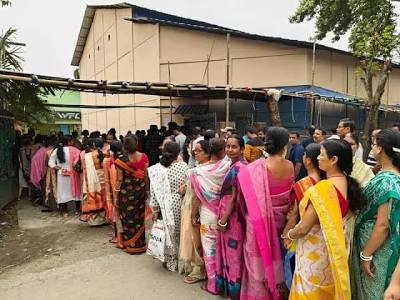
In the evolving electoral landscape of Silchar Assembly Constituency, a striking shift has emerged, one that carries both statistical weight and social significance. For the first time, the number of women voters has surpassed that of men. Out of a total electorate of 204,497, male voters stand at 101,234, while female voters number 103,263, creating a margin of 2,029 in favour of women. This is not merely a numerical anomaly. It is a clear reflection of a changing social fabric.
The Question of Political Sensitivity
Nonetheless the pressing question remains whether this demographic transformation has translated into meaningful political sensitivity. The answer, at present, appears disconcertingly unclear.
Lack of a Clear Roadmap for Women
Despite women forming the majority, there is a visible absence of a structured and forward-looking roadmap aimed at their development. A closer look at campaign narratives and social media discourse reveals not overt hostility, but a more subtle and perhaps more troubling deficiency. There is a lack of proactive prioritisation of women’s issues. This absence of focus raises concerns about whether political stakeholders are truly attuned to the aspirations of this decisive voter base.
The Silent Power of Women Voters
Women voters are often described as silent voters. They do not always articulate their preferences publicly, yet their choices at the ballot box are decisive. They either consolidate strongly behind a particular political force or disengage entirely from the electoral process. In the current climate, the latter possibility appears increasingly plausible, particularly among segments of Hindu women voters, where signs of quiet disengagement are becoming more perceptible.
Political Accountability Under Scrutiny
This brings into sharp focus the question of political accountability. The Bharatiya Janata Party-led National Democratic Alliance government in Assam has introduced several welfare initiatives such as Orunodoi, Chief Minister’s Women Entrepreneurship Scheme, Atmanirbhar Asom, and Lakhpati Baideo. At the national level, the party has also emphasised increasing women’s political participation. On the other hand, the Indian National Congress, which once saw the leadership of Indira Gandhi, continues to face scrutiny over the consistency of its commitment to women-centric policies.
Ground Reality Tells a Different Story
However, this broader narrative appears to dissipate upon reaching the ground realities of Silchar. At the constituency level, neither the BJP nor the Congress has articulated a dedicated manifesto or a clear, targeted vision for women voters. This raises a critical concern. Are political parties assuming that women voters will naturally align with a predetermined side? If so, such assumptions risk marginalising a demographic that now holds numerical advantage.
Rising Concerns Over Safety and Livelihood
The ground situation further complicates this narrative. Rising incidents of crimes against women have become a source of growing concern. Employment opportunities remain limited, with many women compelled to work under precarious conditions, often for low wages and without basic amenities. In several cases, even fundamental infrastructure such as separate sanitation facilities is lacking. These are not peripheral issues. These issues directly impact dignity, safety, and economic independence, yet they continue to be noticeably absent from mainstream political discourse.
Uncertain Future for Educated Young Women
Equally significant is the question surrounding educated young women voters. As more women acquire skill-based education, the expectation of meaningful employment opportunities rises. However, in Silchar, the pathways for such opportunities remain uncertain. Government jobs are limited and cannot absorb the growing pool of aspirants. The absence of viable alternatives raises an uncomfortable but necessary question about the future awaiting these young voters, many of whom could play a decisive role in shaping electoral outcomes.
A Warning Signal for Political Stakeholders
The message emerging from Silchar is therefore both clear and cautionary. Women voters may have gained numerical prominence, but they continue to lag in political prioritisation. If this gap remains unaddressed, silence itself may evolve into the most powerful form of electoral response.
Bureau News, Hype Headlines