Putin’s Quiet Game: Is Russia Orchestrating an Exit Strategy for Trump in Iran?
Russia’s covert intelligence outreach to the US amid Iran tensions signals a complex power play. Hype Headlines examines Putin’s strategy and Trump’s potential exit from conflict.
GEO-POLITICS
Bureau News, Hype Headlines
4/2/20262 min read


🔥 Hype Headlines Editorial | Power Plays Behind Closed Doors 🔥
In the opaque world of global intelligence and geopolitical manoeuvring, what is said publicly often matters far less than what is quietly coordinated behind the scenes. Sergei Naryshkin, head of Russia’s foreign intelligence service, has once again revealed a high-stakes diplomatic chessboard.
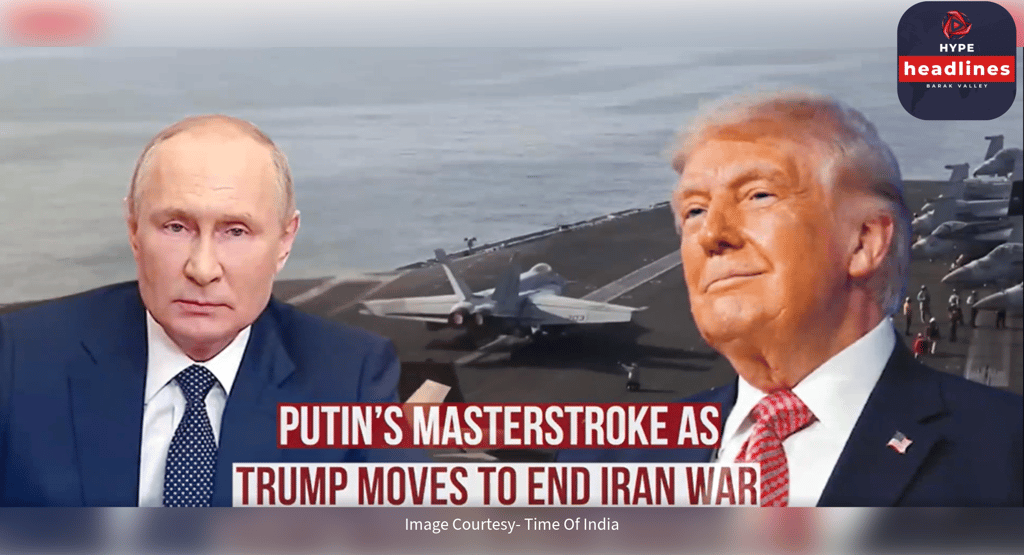
According to Naryshkin, Russia’s SVR is actively in contact with the Central Intelligence Agency regarding the volatile situation in Iran. On the surface, such communication might appear routine. In reality, it raises a far more provocative question. Is Vladimir Putin quietly positioning himself as the architect of a strategic off-ramp for Donald Trump?
A War, A Withdrawal, and A Whisper Network
Reports suggesting that Russia has been assisting Iran with intelligence inputs, satellite imagery, and advanced drone tactics have already unsettled policymakers in Washington. If true, this places Moscow in a paradoxical position. Moscow is publicly aligned with Tehran's strategic interests, while privately maintaining open lines of communication with American intelligence.
At the same time, Trump’s indication that United States forces may soon withdraw from the conflict zone adds another layer of intrigue. Withdrawals in geopolitics are rarely spontaneous. They are negotiated, calibrated, and often influenced by actors who remain deliberately out of the spotlight.
Could Russia be shaping the conditions for such a withdrawal while ensuring its influence expands in the region?
Playing Both Sides or Controlling the Board?
The Kremlin’s approach, if viewed through a realist lens, is not contradictory. It is calculated.
By supporting Iran tactically, Russia strengthens its foothold in the Middle East and challenges Western dominance. Simultaneously, by engaging with the United States through intelligence backchannels, it positions itself as an indispensable intermediary. It positions itself not as an adversary, but as a necessary negotiator.
This dual-track strategy allows Moscow to extract leverage from both sides. It can escalate tensions when beneficial and de-escalate when it serves its broader geopolitical objectives.
In essence, Russia does not need to choose sides if it can control the tempo of the conflict.
America’s Dilemma
For Washington, the situation presents a strategic conundrum. Accept Russia’s involvement and risk legitimising its growing influence, or reject it and potentially lose a viable pathway to disengagement.
Trump’s potential exit from the Iran theatre, if it materialises, will not merely be a military decision. It will be a geopolitical signal. One that could redefine alliances, redraw influence maps, and recalibrate power balances across the Middle East.
The Bigger Question
Is this a case of quiet diplomacy preventing a larger war, or a masterclass in geopolitical opportunism by the Kremlin?
If Russia is indeed facilitating both escalation and resolution, it underscores a stark reality of modern geopolitics. Power today is not just about military might. It is about controlling narratives, timing, and access.
And right now, Moscow appears to be doing all three.
At Hype Headlines, we look beyond the headlines to decode the strategy beneath.
📢 Follow, Like, and Share Hype Headlines for sharp, no-nonsense editorials that track power, politics, and the games nations play.
Bureau News, Hype Headlines